Menu
Call this Thursday to Get 10% OFF

Call this Thursday to Get 10% OFF
24-Hour Emergency Electricians in DallasCall this Thursday to Get 10% OFF
Call this Thursday to Get 10% OFF
24-Hour Emergency Electricians in Dallas
The world is becoming more eco-conscious, shifting towards an environmentally friendlier approach. Imagine never stopping at a gas station for gas, which significantly reduces your carbon footprint. If you want to be part of the revolution, Mr. Electric of Dallas can provide EV charging station installation services for your fuel cell or battery electric vehicle.
Electric vehicles are easy to charge, convenient, and cost-effective, especially if you charge at home. Charging an electric car is as simple as charging your phone, and our EVSE installers can ensure your system meets your charging needs to enhance your overall experience. Before proceeding with an EV charging station installation project, schedule an inspection with an electrician in Farmers Branch. This allows you to leverage a certified technician’s extensive knowledge and expertise to mitigate safety hazards.
Once you hire an electrician to install an EV charging station, it is common to inquire about the charging speed. However, three factors determine charging speed: the equipment’s power level, your EV’s onboard charger capacity, and the ambient temperature. In addition, the time to charge at each power level depends on your electric vehicle’s battery size.
Batteries function better when it is not too cold or hot. When charging an EV battery, it generates heat but has mechanisms to mitigate overheating automatically. When temperatures rise during charging, the EV’s internal battery management system slows charging speed. Here is a breakdown of the various power levels and charging speeds.
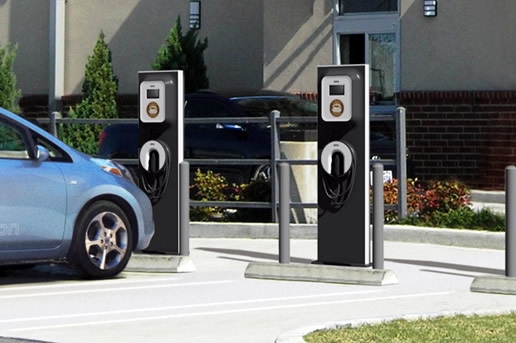
Modern electric vehicles have a portable level 1 charger to plug into a standard 120-volt outlet. Unlike higher levels of charging, which require high voltage outlets, level 1 chargers allow you to charge an electric vehicle within the comfort of your home without additional installations. A typical 40-mile commute should fully charge overnight, making level 1 charges the best option for daily driving.
We often find level 2 charging equipment in public areas, such as parking lots and other places vehicles park for a long time. You can also invest in a level 2 charging station for your home, but ensure you hire certified EVSE installers to mitigate potential risks. Level 2 charging equipment uses 208 to 240-volt outlets to supply sufficient power. Since most homes have low-voltage outlets, electrical work may be required to install higher-voltage outlets in convenient charging locations at home. The 40-mile average daily drive is restored within two hours, making a level 2 faster and more convenient than a level 1 charger.
No matter the size or complexity of your residential or commercial project, you can count on us to provide professional, high-quality results.

For professional and cost-effective smoke detector replacement in Dallas, TX, rely on the qualified and experienced electricians in Dallas, TX.…

Are you tired of waiting until June or July to enjoy your swimming pool? If you want to get the most…

Dealing with electrical problems can be frustrating and challenging for busy families and businesses. At Mr. Electric of Dallas, we are…

Has it been too long since your last appointment with a qualified electrician? Sometimes, damaged circuits, outdated wiring, and other…

Are you looking for creative ways to decrease your monthly energy usage while improving the convenience and comfort of your living…
.webp)
Direct connect chargers, or DC chargers, rely on a larger electric grid to deliver power directly to the vehicle, unlike level 1 or 2 chargers. Most EV chargers have to convert current to a lower power level before entering the car, but a DC charger is faster and more powerful, providing a whopping 10-20 miles of range every minute. You can find DC chargers in workplaces or public facilities, but ensure your vehicle’s charger is connected and can plug in directly.
If you want to learn more about the long-term fuel saving of an electric vehicle compared with a gas-powered car, contact us at Mr. Electric of Dallas. Please schedule a consultation with our expert EVSE installers and enjoy quality services at competitive rates.
A power surge, as the name implies, is a sudden increase in voltage that goes well above the normal level flowing through a circuit. This spike in voltage can damage appliances, electronics, and your home’s electrical system. When most people think about power…
Read More
There seems to be an unending list of decisions to make when it comes to generator installation. One of those options is which fuel source works best for whole-house generators. Two of the most popular fuel choices are natural gas and liquid…
Read More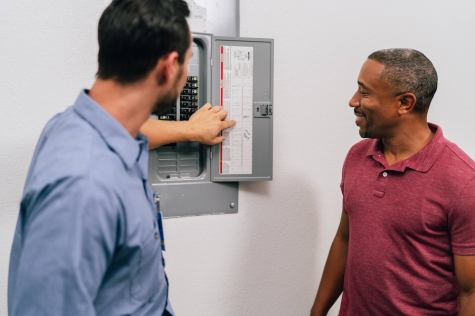
If your circuit keeps tripping, it is your home’s way of telling you something is wrong. Maybe it happens every time you run a specific appliance like a dryer, microwave, washing machine, refrigerator, or oven. Faulty appliances are one of the common causes…
Read More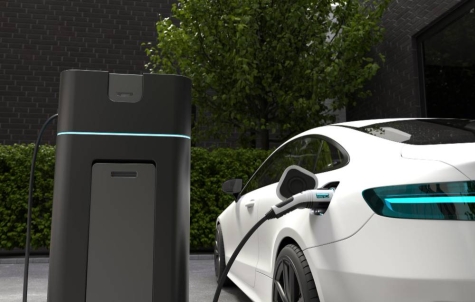
Installing an EV charger at home is a worthwhile investment that will pay off in the long run. It provides unparalleled convenience, long-term savings, and increased property value. But before EV charger installation, many homeowners wonder whether an electrical panel replacement in…
Read More