Menu
Call this Tuesday to Get 10% OFF

Call this Tuesday to Get 10% OFF
24-Hour Emergency Electricians in DallasCall this Tuesday to Get 10% OFF
Call this Tuesday to Get 10% OFF
24-Hour Emergency Electricians in Dallas
A ground fault is a danger that can happen in any residence or business building. It is an inadvertent diversion of electricity from its intended route. If any electricity escapes, it can result in an electric shock or fatal electrocution. Luckily, specific gadgets can help avoid harm. This article will cover the distinctions between GFI and GFCI.
GFI is just short for ground fault interrupter outlet. This is a specific type of outlet that is usually placed in wet or damp locations in a building to identify ground faults in circuits and cut off power to prevent electric shock. We give importance to local protection by mentioning GFIs when discussing local outlets or receptacles, whose circuit tripping capability is confined to the specific areas of installation.
The need for a GFI receptacle arises from the characteristics of the electric current. An electric current needs to move from a section of the circuit with high potential (the energized area) to an area with lower potential. The current will follow the easiest route to the ground. The GFI outlet or receptacle is designed to prevent electric shock by tripping the circuit when it senses a ground fault or circuit leakage.
The GFCI outlets or receptacles, typically found in bathrooms and kitchens, are specialized and distinct. GFCI stands for ground fault circuit interrupter and is a device that stops electricity from reaching a faulty appliance or fixture by detecting a difference in current between the hot and neutral sides. GFCIs can function either as a circuit breaker or as a receptacle connected to an electrical outlet. The GFCI circuit breaker, which is placed in the distribution panel, is meant to interrupt the current for all outlets located further down the circuit.

GFI stands for ground fault interrupter, whereas GFCI stands for ground fault circuit interrupter. It is evident that the 'circuit' is the main distinction between the two terms. GFI is typically utilized for a local receptacle or outlet handling one or more devices, whereas GFCI (or occasionally GFCI breaker) is used to describe both a local receptacle and the circuit breaker found in the distribution panel. Both GFI and GFCI outlets prevent electric shocks by shutting off power when there is a disruption in the ground connection. When utilized as receptacles, GFI or GFCI sockets have the same appearance and operate in the same manner.
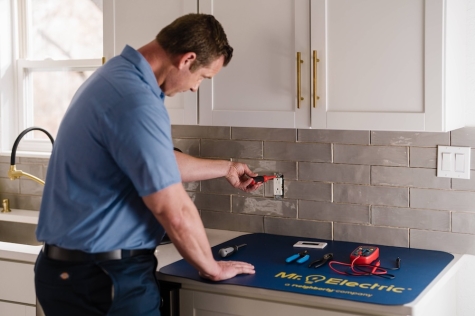
If your GFCI outlet is outdated, damaged, or frequently tripping, it may need electrical outlet replacement to ensure your electrical system operates safely and efficiently. Replacing a standard electrical outlet with a GFCI provides an added layer of protection, preventing potential hazards and helping meet modern electrical codes. It’s important to have a qualified electrician from Mr. Electric handle this task to ensure proper installation and avoid any safety risks.
No matter the size or complexity of your residential or commercial project, you can count on us to provide professional, high-quality results.

For professional and cost-effective smoke detector replacement in Dallas, TX, rely on the qualified and experienced electricians in Dallas, TX.…


Are you tired of waiting until June or July to enjoy your swimming pool? If you want to get the most…


Dealing with electrical problems can be frustrating and challenging for busy families and businesses. At Mr. Electric of Dallas, we are…


Has it been too long since your last appointment with a qualified electrician? Sometimes, damaged circuits, outdated wiring, and other…


Are you looking for creative ways to decrease your monthly energy usage while improving the convenience and comfort of your living…
.webp)
At Mr. Electric, we understand that dealing with electrical issues can be frustrating and inconvenient. However, knowing basic electrical troubleshooting steps can save the day and prevent serious electrical hazards. In this guide, we’ll share basic electrical troubleshooting tips for homeowners. But remember, if an…
Read More
Frequently tripping circuit breakers often point to overloading, short circuits, or ground faults. However, breakers that keep tripping could be a sign of a failing electrical panel, outdated wiring, or loose connections. Frequent circuit breaker tripping is not just a safety hazard, but it’s also…
Read More
Electrical safety and reliability shouldn’t be taken lightly. Whether you’re a homeowner looking to list your home or you’ve noticed an issue with your electrical system, electrical inspections are important. We cannot emphasize this enough. It’s in your best interest to have a licensed electrician…
Read More
Most households turn to the AC and ceiling fans to deal with heat when the outside temperatures soar. Both systems can make a big difference to comfort, but they work in different ways to achieve this. With rising energy costs, households are finding ways to…
Read More